
The effects of realistic mathematics education and direct instruction on students’ mathematical critical thinking abilities: Considering levels of mathematical resilience
##plugins.themes.bootstrap3.article.sidebar##
##plugins.themes.bootstrap3.article.main##
Abstract
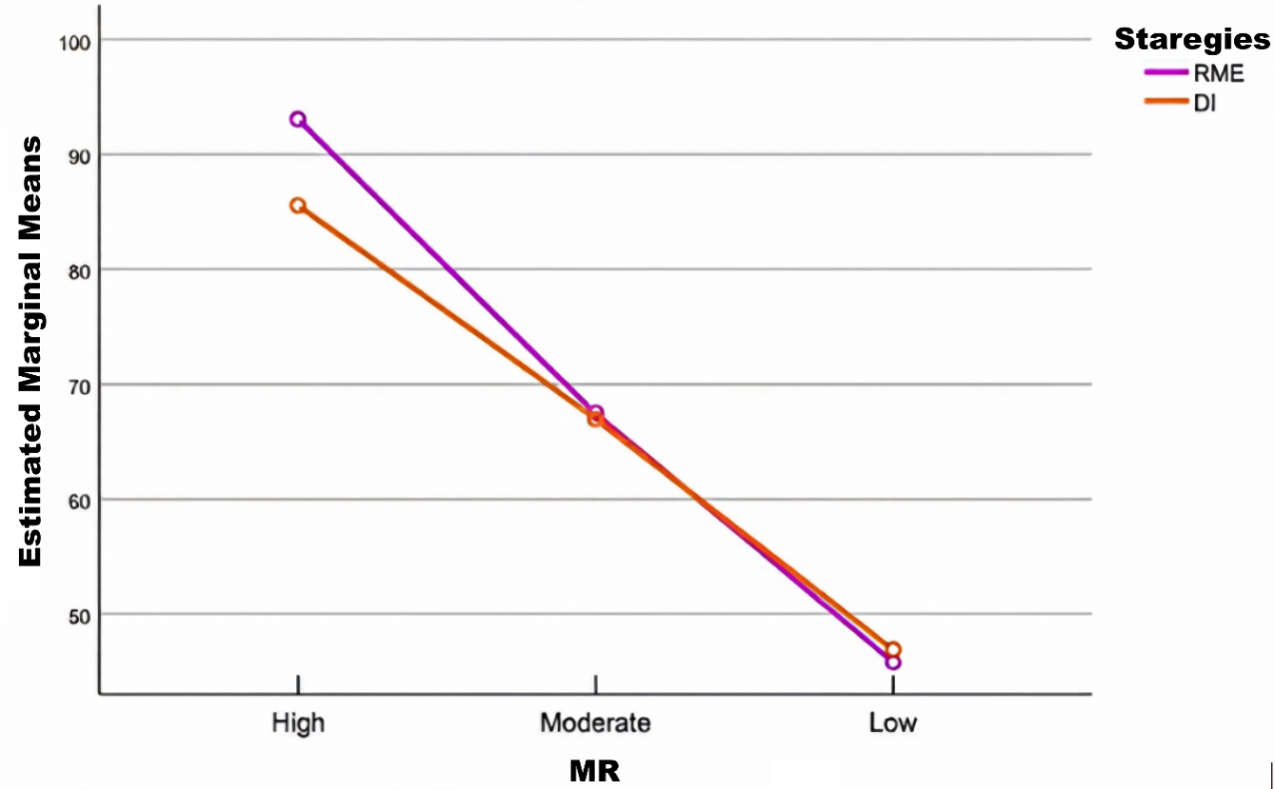
Indonesian elementary school students’ mathematical critical thinking abilities (MCTA) remain suboptimal, highlighting the need for more effective instructional approaches. However, limited evidence has compared the effectiveness of Realistic Mathematics Education (RME) and Direct Instruction (DI) while considering students’ mathematical resilience (MR). This study aimed to examine the effects of RME and DI on students’ MCTA while considering their MR levels. A quantitative quasi-experimental design was employed with 34 fifth-grade students from an elementary school in Padalarang Village, Indonesia. The intervention consisted of three 70-minute instructional sessions. Data were collected using an MCTA test and an MR questionnaire and analyzed using descriptive and inferential statistics. Students in both groups showed significant improvements in MCTA. Although the RME group achieved slightly higher MCTA acquisition than the DI group, the difference was not statistically significant. However, RME produced significantly greater MCTA improvement than DI. Students with different MR levels showed significant differences in both MCTA acquisition and improvement, and MR had a significant positive effect on MCTA. No significant interaction effect was found between the learning approach (RME and DI) and MR. Overall, both RME and DI effectively improved students’ MCTA, with RME yielding greater improvement regardless of students’ MR levels.
INTRODUCTION
Mathematics is one of the fundamental disciplines in elementary education because it equips students with the knowledge, reasoning, and problem-solving skills needed to understand patterns, solve real-world problems, and make informed decisions in everyday life(OECD, 2023). In the twenty-first century, mathematics education is expected to foster higher-order thinking skills that enable students to address increasingly complex and authentic problems(Demircioglu et al., 2023; Lemon & Taylor, 2026). Therefore, mathematics instruction should provide meaningful learning experiences that engage students in developing conceptual understanding instead of simply memorizing formulas and procedures.
Mathematical critical thinking abilities (MCTA) refer to students’ ability to interpret mathematical information, analyze arguments, evaluate evidence, draw logical inferences, explain reasoning, and regulate their thinking when solving mathematical problems(Facione, 1990). These abilities enable students to make reasoned judgments and solve mathematical problems based on logical and reflective thinking. MCTA is essential in the 21st century because it helps students remember and understand mathematical concepts, apply mathematics to problem-solving, develop analytical abilities, and make logical decisions(Demircioglu et al., 2023; Lemon & Taylor, 2026). By thinking critically and mathematically, one can analyze metacognitive problems to arrive at the right solution(Anthonysamy et al., 2024; Kurudirek et al., 2026; Parawansa et al., 2026; Wardana et al., 2024). In contemporary mathematics education, the development of MCTA is increasingly viewed as a multidimensional process involving cognitive, affective, and behavioral components(AlAfnan, 2025; DiNapoli, 2023). Students are expected to interpret problems, evaluate information, justify reasoning, and reflect on their thinking processes(Sutama et al., 2022). These competencies are better developed through instructional practices that emphasize contextual inquiry, collaborative reasoning, and meaningful student participation rather than passive knowledge transmission.
The Programme for International Student Assessment (PISA) mathematics framework indicates that students in Indonesia continue to experience difficulties in mathematical reasoning(OECD, 2023). These processes correspond closely to the dimensions of mathematical critical thinking, indicating that mathematical literacy assessed in PISA is closely associated with students’ MCTA(Facione et al., 2020). Similarly, the 2026 Indonesian National Academic Competency Test reported that Indonesian elementary school students achieved a national average mathematics score of only 43.41(Ministry of Primary and Secondary Education, 2026). Consistent with these national findings,Harianja et al. (2023)reported that 6th-grade students at an elementary school in North Tapanuli Regency, North Sumatra, did not demonstrate optimal MCTA, with an average score of 34.8 on the 2D shapes test. These findings suggest that the current level of students’ MCTA remains below the expected level. In this context, students’ persistence when encountering difficulties becomes one of the factors influencing the development of critical thinking(Muharram et al., 2025). When persistence and confidence are limited, students are more likely to disengage from complex problem-solving tasks, which reduces opportunities to practice higher-order thinking. Furthermore, mathematics learning often involves abstract concepts that require students to construct meaning through connections with prior knowledge and real-life situations(İşözen & Kaçar, 2026). When these connections are not established, students tend to rely on memorization rather than conceptual understanding, thereby weakening their critical thinking(Day et al., 2024). Therefore, instructional strategies should facilitate meaningful learning experiences by encouraging students to actively construct knowledge, test their ideas, and refine their understanding through interaction and reflection(Khan, 2020). Such learning conditions foster deeper engagement and enhance students’ ability to apply mathematical concepts across diverse contexts.
Realistic mathematics education (RME), developed from Freudenthal’s view of mathematics as a human activity, encourages students to construct mathematical knowledge through meaningful real-life contexts, guided reinvention, mathematical discussion, and progressive mathematization(Freudenthal, 1973). Through these learning processes, students actively interpret problems, consider alternative approaches to solving them, provide mathematical justification, and evaluate their own reasoning, thereby supporting the development of MCTA. Moreover, contextual problem solving and guided reinvention encourage students to persist when encountering mathematical challenges, develop confidence through successful learning experiences, and regard mistakes as opportunities for improvement. These mechanisms foster self-efficacy, growth mindset, and persistence, which are fundamental dimensions of MR. Therefore, RME is theoretically expected to support the development of both MCTA and MR. Empirical studies have further demonstrated that RME improves students’ MCTA and overall mathematics learning outcomes. The RME is chosen because it is specifically designed for mathematics education strategies that relate concepts to life situations(Van den Heuvel-Panhuizen & Drijvers, 2020). The RME can improve students’ MCTA and learning outcomes(Hayati et al., 2025; Nursyahidah et al., 2025; Palinussa et al., 2025; Siswantari et al., 2025; Ventistas et al., 2025). Building on this theoretical foundation, it is necessary to compare RME with a more structured instructional approach that remains widely implemented in elementary mathematics classrooms.
The direct instruction (DI) is a well-established instructional approach that emphasizes explicit teaching, systematic content sequencing, guided practice, and immediate feedback to facilitate students’ acquisition of foundational knowledge and procedural skills(de Jong et al., 2023). These characteristics make DI particularly effective for novice learners who require structured instructional support before engaging in more complex problem-solving activities(Momdjian et al., 2025). Despite these advantages, mathematics instruction in many Indonesian elementary classrooms continues to rely predominantly on teacher-centered practices that emphasize procedural learning and teacher explanation(Arega & Hunde, 2025; Maryani et al., 2025; Muhaimin et al., 2026). Consequently, DI serves as an appropriate comparison for evaluating whether RME provides additional benefits in developing students’ MCTA. Although both
##plugins.themes.bootstrap3.article.details##

This work is licensed under a Creative Commons Attribution-ShareAlike 4.0 International License.
The author is responsible for acquiring the permission(s) to reproduce any copyrighted figures, tables, data, or text that are being used in the submitted paper. Authors should note that text quotations of more than 250 words from a published or copyrighted work will require grant of permission from the original publisher to reprint. The written permission letter(s) must be submitted together with the manuscript.References
Akkan, S. N., & Horzum, T. (2024). Illuminating the landscape of mathematical resilience: A systematic review. Journal of Pedagogical Research, 8(1), 312–338. https://doi.org/10.33902/jpr.202420093
AlAfnan, M. A. (2025). Enhancing educational outcomes using AlAfnan taxonomy: integrating cognitive, affective, and psychomotor domains. International Journal of Evaluation and Research in Education (IJERE), 14(3), 2419–2437. https://doi.org/10.11591/ijere.v14i3.33147
Alkharusi, H. (2022). A descriptive analysis and interpretation of data from Likert scales in educational and psychological research. Indian Journal of Psychology & Education, 12(2), 13–16.
Anthonysamy, L., Sugendran, P., Wei, L. O., & Hoon, T. S. (2024). An improved metacognitive competency framework to inculcate analytical thinking among university students. Education and Information Technologies, 29(17), 22475–22497. https://doi.org/10.1007/s10639-024-12678-z
Arega, N. T., & Hunde, T. S. (2025). Constructivist instructional approaches: A systematic review of evaluation‐based evidence for effectiveness. Review of Education, 13(1), e70040. https://doi.org/10.1002/rev3.70040
Arifin, Z., Sukarmin, S., Saputro, S., & Kamari, A. (2025). The effect of inquiry-based learning on students’ critical thinking skills in science education: A systematic review and meta-analysis. Eurasia Journal of Mathematics, Science and Technology Education, 21(3), em2592. https://doi.org/10.29333/ejmste/15988
Ariyanto, L., Supandi, S., & Kusumaningsih, W. (2024). Students' reflective thinking profiles in problem-solving based on mathematical resilience. Mosharafa: Jurnal Pendidikan Matematika, 13(3), 849–860. https://doi.org/10.31980/mosharafa.v13i3.1435
Aydın, M., & Erdem, C. (2023). Profiles of academically resilient students: An examination on TIMSS mathematics data. Current Psychology, 42(22), 18916–18927. https://doi.org/10.1007/s12144-022-03055-5
Bacatan, R. J. (2024). Mediating effect of school climate on the relationship between mathematical resilience and disposition of senior high school students. TWIST, 19(2), 17–31.
Ballance, O. J. (2024). Sampling and randomisation in experimental and quasi-experimental CALL studies: Issues and recommendations for design, reporting, review, and interpretation. ReCALL, 36(1), 58–71. https://doi.org/10.1017/s0958344023000162
Bandura, A. (1997). Self-efficacy: The exercise of control. Worth Publishers.
Callaman, R., & Palompon, D. (2026). Development of three-dimensional resiliency theory in solving mathematical problem. Journal of Education and Learning (EduLearn), 20(1), 608–621. https://doi.org/10.11591/edulearn.v20i1.22738
Day, L., Siemon, D., Callingham, R., & Seah, R. (2024). Connecting the threads: the role of multiplicative thinking in algebraic, geometrical, and statistical reasoning. Research in Mathematics Education, 26(2), 325–347. https://doi.org/10.1080/14794802.2024.2372365
de Jong, T., Lazonder, A. W., Chinn, C. A., Fischer, F., Gobert, J., Hmelo-Silver, C. E., Koedinger, K. R., Krajcik, J. S., Kyza, E. A., Linn, M. C., Pedaste, M., Scheiter, K., & Zacharia, Z. C. (2023). Let's talk evidence – The case for combining inquiry-based and direct instruction. Educational Research Review, 39, 100536. https://doi.org/10.1016/j.edurev.2023.100536
Delima, N., Kusuma, D. A., & Paulus, E. (2024). The students' mathematics self-regulated learning and mathematics anxiety based on the use of chat GPT, music, study program, and academic achievement. Infinity Journal, 13(2), 349–362. https://doi.org/10.22460/infinity.v13i2.p349-362
Demircioglu, T., Karakus, M., & Ucar, S. (2023). Developing students’ critical thinking skills and argumentation abilities through augmented reality–based argumentation activities in science classes. Science & Education, 32(4), 1165–1195. https://doi.org/10.1007/s11191-022-00369-5
DiNapoli, J. (2023). Distinguishing between grit, persistence, and perseverance for learning mathematics with understanding. Education Sciences, 13(4), 402. https://doi.org/10.3390/educsci13040402
Doz, E., Cuder, A., Pellizzoni, S., Granello, F., & Passolunghi, M. C. (2024). The interplay between ego-resiliency, math anxiety and working memory in math achievement. Psychological Research, 88(8), 2401–2415. https://doi.org/10.1007/s00426-024-01995-0
Dweck, C. S. (2006). Mindset: The new psychology of success. Random House.
Dwijayanti, A. A. S. S., & Wiarta, I. W. (2024). Problem based learning using open ended questions improves students’ mathematical critical thinking ability in elementary schools. Thinking Skills and Creativity Journal, 7(1), 167–174. https://doi.org/10.23887/tscj.v7i1.78033
Emerson, R. W. (2024). Validity and reliability. Journal of Visual Impairment & Blindness, 118(4), 280–281. https://doi.org/10.1177/0145482x241278447
Facione, P. A. (1990). Critical thinking: A statement of expert consensus for purposes of educational assessment and instruction. https://philarchive.org/archive/faccta
Facione, P. A., Facione, N. C., & Gittens, C. A. (2020). What the critical thinking data tell us about our reasoning. Insight Assessment.
Faradillah, A., & Humaira, T. (2021). Mathematical critical thinking skills senior high school student based on mathematical resilience and domicile. Jurnal Cendekia : Jurnal Pendidikan Matematika, 5(2), 1978–1991. https://doi.org/10.31004/cendekia.v5i2.682
Ferreira, S. M., & Bisognin, V. (2020). Construction of mathematical and financial concepts based on realistic mathematics education. Acta Scientiae, 22(5), 226–253. https://doi.org/10.17648/acta.scientiae.5925
Fitriani, F., Herman, T., & Fatimah, S. (2023). Considering the mathematical resilience in analyzing students' problem-solving ability through learning model experimentation. International Journal of Instruction, 16(1), 219–240. https://doi.org/10.29333/iji.2023.16113a
Freudenthal, H. (1973). Mathematics as an educational task. Springer Dordrecht. https://doi.org/10.1007/978-94-010-2903-2
Gall, J. P., Gall, M. D., & Borg, W. R. (2013). Applying educational research: How to read, do, and use research to solve problems of practice (6th ed.). Pearson Education.
Harianja, R., Tampubolon, T., & Manalu, L. (2023). Analysis of problem-based learning model on mathematical critical thinking skills of elementary school students. Formatif: Jurnal Ilmiah Pendidikan MIPA, 13(1), 101–108. https://doi.org/10.30998/formatif.v13i1.17251
Hayati, R., Nurlaili, N., Zuraini, Z., Syahputra, E., Surya, E., & Abdillah, T. R. (2025). Learning revolution with integrated gamification technology and realistic mathematics education models for contextual and interesting learning. Journal of Hunan University Natural Sciences, 52(2), 72–83. https://doi.org/10.55463/issn.1674-2974.52.2.7
Hayati, R., Syahputra, E., & Surya, E. (2026). Realistic mathematics education grounded in deliberative culture: Fostering problemsolving skills in primary education. Scientific Culture, 12(1), 616–628.
İşözen, Ş., & Kaçar, A. (2026). Real-life contextualization in the geometric shapes unit of fifth grade mathematics textbooks: An analytical study. Osmangazi Journal of Educational Research, 12(2), 139–162. https://doi.org/10.59409/ojer.1824447
Jailani, J., Retnawati, H., Rafi, I., Mahmudi, A., Arliani, E., Zulnaidi, H., Abd Hamid, H. S., & Prayitno, H. J. (2023). A phenomenological study of challenges that prospective mathematics teachers face in developing mathematical problems that require higher-order thinking skills. Eurasia Journal of Mathematics, Science and Technology Education, 19(10), em2339. https://doi.org/10.29333/ejmste/13631
Johar, R., Fauzan, A., Sugiman, S., Anwar, L., Sa’dijah, C., & Khairunnisak, C. (2025). Developing local instruction theory through ethnomathematics and technological-based realistic mathematics education to support students’ spatial ability. Asian Journal for Mathematics Education, 4(4), 553–587. https://doi.org/10.1177/27527263251383572
Johnston-Wilder, S., & Lee, C. (2024). The mathematical resilience book: How everyone can progress in mathematics. Routledge. https://doi.org/10.4324/9781003334354
Khan, U. (2020). Developing critical thinking in student seafarers: An exploratory study. Journal of Applied Learning and Teaching, 3(1), 40–50. https://doi.org/10.37074/jalt.2020.3.s1.15
Kurudirek, A., Machisi, E., & Hennig, F. (2026). Let two plus two not always equal four: A critical pedagogical exploration of mathematical certainty and context. Eurasia Journal of Mathematics, Science and Technology Education, 22(2), em2777. https://doi.org/10.29333/ejmste/17831
Lemon, T., & Taylor, K. (2026). 21st century skills in secondary mathematics classrooms. Mathematics Teacher: Learning and Teaching PK-12, 119(1), 51–57. https://doi.org/10.5951/mtlt.2025.0110
López-Aymes, G., Acuña, S. R., & Ordaz Villegas, G. (2020). Resilience and creativity in teenagers with high intellectual abilities. A middle school enrichment experience in vulnerable contexts. Sustainability, 12(18), 7670. https://doi.org/10.3390/su12187670
Lubis, L. K., Lubis, A. M., Fitriani, F., Siregar, Y. A., & Jehnah, A. (2024). Analysis of students' mathematical concept understanding ability in terms of student resilience at Ban Kadeng school Thailand. Kreano, Jurnal Matematika Kreatif-Inovatif, 15(2), 409–422. https://doi.org/10.15294/bc59ec96
Maryani, L., Riyadi, R., & Kurniawan, S. B. (2025). Comparison of problem-based learning model with direct instruction in mathematics learning towards the development of critical thinking skills. International Journal of Current Science Research and Review, 8(5), 2062–2069. https://doi.org/10.47191/ijcsrr/V8-i5-13
Meirong, Z., & Mustafa, Z. (2025). The Chinese adaptation of the mathematical resilience scale among high school students: Validity and reliability study. Edelweiss Applied Science and Technology, 9(3), 864–880. https://doi.org/10.55214/25768484.v9i3.5359
Méndez-Parra, C., Conde-Carmona, R. J., & Padilla-Escorcia, I. A. (2022). Characterisation of probability learning in a rural environment with the realistic mathematics education. Acta Scientiae, 24(4), 1–23. https://doi.org/10.17648/acta.scientiae.6709
Ministry of Primary and Secondary Education. (2026). 2026 elementary school academic competency test results. Kemendikdasmen. https://tka.kemendikdasmen.go.id/hasiltka
Momdjian, L., Manegre, M., & Gutiérrez-Colón, M. (2025). A study of preservice teachers’ digital competence development: Exploring the role of direct instruction, integrated practice, and modeling. Evaluation and Program Planning, 109, 102538. https://doi.org/10.1016/j.evalprogplan.2025.102538
Muhaimin, L. H., Suryadi, D., Dasari, D., Hendriyanto, A., & Bagus Pramartha, I. N. (2026). A comparative praxeological analysis of quadrilateral and triangle concepts in Indonesian and Japanese elementary school textbooks. Research in Comparative and International Education, 21(1), 22–47. https://doi.org/10.1177/17454999251411410
Muharram, M. R. W., Herman, T., Wahyudin, W., & Mufliva, R. (2025). Mathematical mindset, critical thinking skills, and productive struggle in learning mathematics in elementary school. In The International Conference of Interdisciplinary Research and Studies in Mathematics: InCiReSMa2024, (Vol. 3316, pp. 110017). https://doi.org/10.1063/5.0290170
Muñez, D., Bull, R., Khng, K. H., Ng, E. L., Poon, K., & Lee, K. (2025). Mathematics resilience in preschool and executive functions. Learning and Instruction, 100(1), 102197. https://doi.org/10.1016/j.learninstruc.2025.102197
Murni, M., Fadhillah, F., Anzora, A., Tiara, M. P., & Yeni, M. (2026). Eco–realistic mathematics education (Eco–RME) module for students with special needs in inclusive primary schools in Aceh province. Journal of Curriculum and Teaching, 15(1), 92–101. https://doi.org/10.5430/jct.v15n1p92
Naldi, W. (2023). Peningkatan numerasi dan resiliensi matematis siswa kelas V sekolah dasar melalui pembelajaran realistic mathematics education (RME) [Improving numeracy and mathematical resilience of fifth-grade elementary school students through realistic mathematics education (RME) learning]. Master’s Thesis. Universitas Pendidikan Indonesia. https://repository.upi.edu/113913/
Ndia, L., Salam, M., Iru, L., & Atma, N. (2025). Differentiated instruction in problem-based and direct instruction: The moderating role of mathematical disposition on students’ mathematical communication skills. Education Sciences, 15(12), 1636. https://doi.org/10.3390/educsci15121636
Nursyahidah, F., Wardono, W., Mariani, S., & Wijayanti, K. (2025). Integrating technology, Javanese ethnomathematics, and realistic mathematics education in supporting prospective mathematics teachers' numeracy skills: A learning trajectory. Journal on Mathematics Education, 16(2), 671–688. https://doi.org/10.22342/jme.v16i2.pp671-688
OECD. (2023). PISA 2022 results (volume I): The state of learning and equity in education. OECD Publishing. https://doi.org/10.1787/53f23881-en
Opesemowo, O. A. G., Olosunde, G. R., & Ariyo, S. O. (2025). Improving mathematics performance through after-school interventions: A gender-based analysis of low-achieving students. Education Sciences, 15(12), 1587. https://doi.org/10.3390/educsci15121587
Palinussa, A. L., Tupamahu, P. Z., Sabandar, V. P., Makaruku, Y. H., & Sabandar, J. (2025). Realistic mathematics education: Mathematics e-modules in improving student learning outcomes. Infinity Journal, 14(1), 45–64. https://doi.org/10.22460/infinity.v14i1.p45-64
Parawansa, Y., Kamid, K., & Maison, M. (2026). Analysis of students' critical thinking ability in solving mathematical problems assisted by ethnomathematics based on adversity quotient. Journal of Mathematics Instruction, Social Research and Opinion, 5(1), 371–387. https://doi.org/10.58421/misro.v5i1.961
Pillero, J. M., Cabuquin, J. C., Dysoco, P. K., Alas, X. A., Nazal, R. M., & Manabat, M. A. A. (2026). Exploring Filipino STEM students’ struggles in mathematics: Contributing factors and implications for teaching. International Research Journal of Multidisciplinary Scope, 7(1), 570–589. https://doi.org/10.47857/irjms.2026.v07i01.07643
Polydoros, G., Galitskaya, V., Pergantis, P., Drigas, A., Antoniou, A.-S., & Beazidou, E. (2025). Innovative AI-driven approaches to mitigate math anxiety and enhance resilience among students with persistently low performance in mathematics. Psychology International, 7(2), 46. https://doi.org/10.3390/psycholint7020046
Purnomo, Y. W., Prananto, I. W., Fitriya, Y., & Kaur, A. (2024). The role of self-regulation in the relationship between adaptability and engagement: A case of online mathematics learning for elementary school students. Online Learning, 28(1), 1–21. https://doi.org/10.24059/olj.v28i1.3849
Rahmi, N. E. (2022). Mathematical problem-solving ability of junior high school students based on mathematical resilience in the pythagorean theorem. Journal of Research on Mathematics Instruction (JRMI), 3(2), 1–10. https://doi.org/10.33578/jrmi.v3i2.65
Rasyidah, R., Maisura, M., Saputra, S., Santi, Y., & Yeni, E. M. (2026). The effect of realistic mathematics education (RME) on mathematical reasoning ability and critical thinking of elementary school students in plane figures material. Journal of Educational Sciences, 10(2), 2488–2505.
Samritin, S., Natsir, S. R., Manaf, A., & Sari, E. R. (2023). The effect of realistic mathematics education implementation in mathematics learning in elementary school. Formatif: Jurnal Ilmiah Pendidikan MIPA, 13(1), 81–88. https://doi.org/10.30998/formatif.v13i1.16522
Secadron, A. C., & Tan, D. A. (2023). Enhancing students’ mathematical resilience and critical thinking skills using e-modules via process-oriented-guided-inquiry-learning approach. American Journal of Educational Research, 11(5), 287–296.
Sidik, G. T., & Herman, T. (2025). The effect of the implementation of realistic mathematics education on improving critical thinking skills in solving mathematical problems. In The International Conference of Interdisciplinary Research and Studies in Mathematics: InCiReSMa2024, (Vol. 3316, pp. 100001). https://doi.org/10.1063/5.0290718
Siswantari, S., Sabon, S. S., Listiawati, N., Wirda, Y., Zulkardi, Z., & Riyanto, B. (2025). Bridging mathematics and communication: Implementing realistic mathematics education principles for skill development. Journal on Mathematics Education, 16(2), 729–752. https://doi.org/10.22342/jme.v16i2.pp729-752
Susandi, A. D., & Widyawati, S. (2022). Implementation of realistic mathematic education (RME) learning model in improving critical thinking skills. Al-Jabar : Jurnal Pendidikan Matematika, 13(2), 251–260. https://doi.org/10.24042/ajpm.v13i2.14996
Susanti, P., Utomo, S., & Sumaji, S. (2022). The effectiveness of realistic mathematics education learning approach on critical thinking skills of elementary school students. ANARGYA: Jurnal Ilmiah Pendidikan Matematika, 5(2), 197–205. https://doi.org/10.24176/anargya.v5i2.8308
Sutama, S., Fuadi, D., Narimo, S., Hafida, S. H. N., Novitasari, M., Anif, S., Prayitno, H. J., Sunanih, S., & Adnan, M. (2022). Collaborative mathematics learning management: Critical thinking skills in problem solving. International Journal of Evaluation and Research in Education (IJERE), 11(3), 1015–1027. https://doi.org/10.11591/ijere.v11i3.22193
Sutarni, S., Sutama, S., Prayitno, H. J., Sutopo, A., & Laksmiwati, P. A. (2024). The development of realistic mathematics education-based student worksheets to enhance higher-order thinking skills and mathematical ability. Infinity Journal, 13(2), 285–300. https://doi.org/10.22460/infinity.v13i2.p285-300
Syamsulrizal, S., Khabibah, S., Lukito, A., & Madzkiyah, A. F. (2025). Students’ critical thinking dispositions in view of cognitive styles: Exhibiting confidence in reasoning and inquisitive. Perspectives of Science and Education, 73(1), 583–594. https://doi.org/10.32744/pse.2025.1.37
Taja-on, E. P., Dajero, B. K. C., & Barete, M. G. (2025). Mathematics and modern society: A delphi study exploring mathematics education towards Education 4.0. Educational Point, 2(1), e120. https://doi.org/10.71176/edup/16534
Umar, U., Kaharuddin, A., Fauzi, A., Widodo, A., Radiusman, R., & Erfan, M. (2020). A comparative study on critical thinking of mathematical problem solving using problem based learning and direct intruction. In Proceedings of the 1st Annual Conference on Education and Social Sciences (ACCESS 2019), (pp. 314–316). https://doi.org/10.2991/assehr.k.200827.079
Van den Heuvel-Panhuizen, M., & Drijvers, P. (2020). Realistic mathematics education. In S. Lerman (Ed.), Encyclopedia of mathematics education (pp. 713–717). Springer International Publishing. https://doi.org/10.1007/978-3-030-15789-0_170
van Viersen, S., Psyridou, M., & Torppa, M. (2026). General introduction to the special issue on resilience in learning. Learning and Instruction, 101(1), 102254. https://doi.org/10.1016/j.learninstruc.2025.102254
Ventistas, G., Ventista, O. M., & Tsani, P. (2025). The impact of realistic mathematics education on secondary school students’ problem-solving skills: a comparative evaluation study. Research in Mathematics Education, 27(3), 437–461. https://doi.org/10.1080/14794802.2024.2306633
Wardana, A., Sukestiyarno, Y. L., Wardono, W., & Suyitno, A. (2024). Analysis of high school students' critical thinking ability in solving mathematical problems with independence problem-based learning (IPBL) model: A case study on middle class students. Educational Administration: Theory and Practice, 30(3), 7137–7147. https://doi.org/10.53555/kuey.v30i4.1523
Wibowo, S., Wangid, M. N., & Firdaus, F. M. (2025). The relevance of Vygotsky's constructivism learning theory with the differentiated learning primary schools. Journal of Education and Learning (EduLearn), 19(1), 431–440. https://doi.org/10.11591/edulearn.v19i1.21197
Wu, T.-T., Silitonga, L. M., Dharmawan, B., & Murti, A. T. (2024). Empowering students to thrive: The role of CT and self-efficacy in building academic resilience. Journal of Educational Computing Research, 62(3), 596–625. https://doi.org/10.1177/07356331231225468
Xenofontos, C., & Mouroutsou, S. (2023). Resilience in mathematics education research: A systematic review of empirical studies. Scandinavian Journal of Educational Research, 67(7), 1041–1055. https://doi.org/10.1080/00313831.2022.2115132
Yohannes, A., & Chen, H.-L. (2024). The effect of flipped realistic mathematics education on students’ achievement, mathematics self-efficacy and critical thinking tendency. Education and Information Technologies, 29(13), 16177–16203. https://doi.org/10.1007/s10639-024-12502-8
Zanganeh, A., Haj Hosseini, M., & Hosseini, S. (2025). The role of mathematical self-efficacy in the relationship between mathematical resilience and academic achievement in mathematics among humanities students. Iranian Journal of Applied Educational Research, 1(1), 1–9.